Product Description
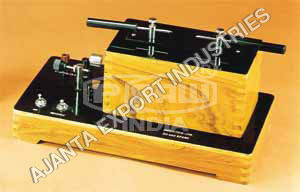
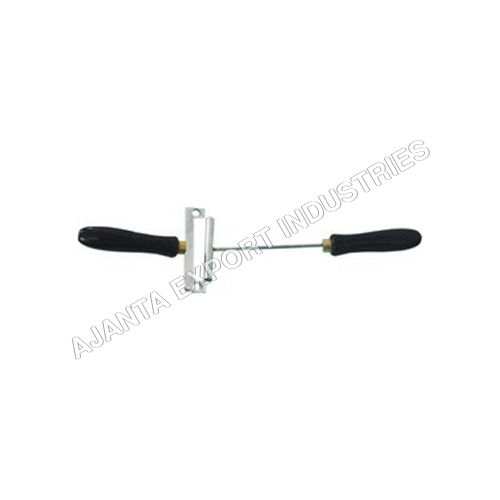
The instrument consists of two round scales. One with index and the other with vernier. The first scale (index scale) is for turning the analyzer into the azymuth. The second scale (vernier scale) is for measuring the degree of orientation of a wedge box. The wedge box contains two wedges cut in mutually perpendicular direction of optics axis in quartz. The long wedge is movable by means of a micrometer screw minimum reading of the movement is taken. Micrometer screw minimum reading 0.001 cm. 1291 (a) Without Quarter Wave Plate 1291 (b) With Quarter Wave PlatePrecision Measurement for Optics LaboratoriesThe Babinet Compensator offers meticulous phase compensation, enabling demonstrations of double refraction and phase retardation. Graduated to a scale of 1 micron, users gain the benefit of extremely fine control, essential for high-accuracy laboratory experiments. Its robust base and manual fine-pitch micrometer create exceptional operational stability and reliability, making it an indispensable tool in academic and research labs.
Sturdy Design and Easy UsabilityDesigned with a powder-coated base and a chrome-finished micrometer screw, the compensator is built for long-term use. The ergonomic design allows for straightforward manual adjustments, while the compact box and supplied case make it convenient to transport or store. The instrument's maintenance-free, manual operation means you won't need external power, ensuring reliable results in any setting.
FAQ's of Babinet Compensator:
Q: How does the Babinet Compensator function for measuring optical path differences?
A: The Babinet Compensator utilizes two high-quality optical glass wedges-one fixed and one movable-mounted in a robust frame. By precisely adjusting the position of the movable wedge using the micrometer screw (1 micron least count), it introduces variable optical path differences up to 1500 nm. This allows accurate phase compensation in light beams, essential for polarization studies and measurements.
Q: What laboratory applications is this instrument best suited for?
A: This Babinet Compensator is ideal for educational demonstrations, research experiments involving phase retardation, and the measurement of double refraction in optical materials. Its precise scale and stable base make it suitable for various laboratory optics experiments requiring high accuracy and repeatability.
Q: When should I use a Babinet Compensator in my optical experiments?
A: A Babinet Compensator should be used when you need to introduce and measure specific optical path differences, particularly in polarization experiments or when demonstrating phase retardation between light waves. It is highly effective for determining birefringence in crystals or other optical components.
Q: Where can the Babinet Compensator be used most effectively?
A: This device is most effective in controlled laboratory environments such as university labs, research institutes, and advanced teaching facilities. The instrument's heavy, stable base and protective case enable safe setup on optical benches or lab workstations.
Q: What is the process for setting up and using the Babinet Compensator?
A: Begin by carefully mounting the compensator on a stable optical bench or table. Use the supplied instructions to align the instrument in your optical path. Adjust the movable wedge using the precision micrometer to achieve the desired optical path difference, observing changes through your detection system. The engraved or vernier scale allows for precise readings.
Q: What are the main benefits of manual micrometer-driven adjustment?
A: Manual micrometer-driven adjustment provides exceptionally accurate and repeatable control of the wedge position, ensuring you can achieve precise optical path differences. The 1-micron graduation allows for fine-tuned compensation without the need for electronic power-resulting in reliable, maintenance-free operation.







 English
 Spanish
 French
 German
 Italian
 Chinese (Simplified)
 Japanese
 Korean
 Arabic
 Portuguese


 Send Inquiry

