Product Description
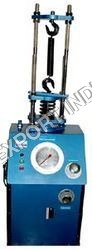
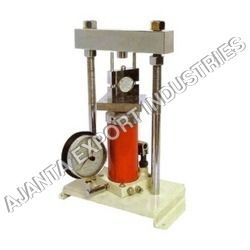
The test is applicable to hot mix designs using bitumen and aggregates upto a maximum size of 25mm. In this method, the resistance to plastic deformation of cylindrical specimen of bitumenous mixture is measured when the same is loaded at periphery at 5 cm per min. This test procedure is used in designing and evaluating bituminous paving mixes. The test procedure is extensively used in routine test programmes for paving jobs. There are two major features of the Marshall method of designing mixes namely, a) Density" voids analysis b) Stability" flow tests. The marshall stability of mix is defined as a maximum load carried by a compacted specimen at a standard test temperature of 60oC. The flow value is deformation the marshall test specimen under goes during the loading upto the maximum load, 0.25 mm units. In this test and attempt is made to determine optimum binder content for the type of aggregate mix and traffic intensity. Accurate Bitumen Mix TestingEngineered for precision, the Marshall Stability Test Apparatus efficiently measures the stability and flow properties of bituminous mixtures. Its digital indicator and dial gauge enable users to obtain highly accurate readings quickly, essential for quality control and research applications in asphalt technology.
Versatile and User-Friendly OperationThis apparatus offers both automatic and manual loading options, adapting to various laboratory requirements. Compatible accessories such as compaction moulds and breaking heads facilitate straightforward sample preparation and testing. The user-friendly design streamlines daily laboratory operations.
Reliable Performance and ConstructionManufactured from tough mild steel, the apparatus is built for longevity and repeated usage. The thermostatically controlled bath ensures the provision of consistent testing conditions. Suppliers, distributors, and manufacturers across India trust in its robust quality and dependable performance.
FAQ's of Marshall Stability Test Apparatus :
Q: How is the Marshall Stability Test Apparatus used in laboratories?
A: The apparatus is utilized to evaluate the stability and flow characteristics of asphalt mixes. Engineers prepare samples using the included compaction moulds, heat them in the thermostatic bath, and then test their load-bearing capacity and deformation using the automatic or manual loading unit and digital indicator.
Q: What is the main benefit of using this Marshall Stability Test Apparatus?
A: It provides precise and reproducible test results, ensuring that bituminous mixes meet quality and durability standards for road construction. Its digital measurements, robust build, and comprehensive accessories enhance laboratory efficiency and reliability.
Q: When should the thermostatic heating bath be used during testing?
A: The thermostatically controlled bath is essential when samples need to be conditioned to 60C before testing. This process ensures uniform temperature across all samples, a critical step for consistent and comparable test outcomes.
Q: Where is this Marshall Stability Test Apparatus most commonly used?
A: It's mainly utilized in highway engineering laboratories, research centers, and quality control departments of construction firms, especially for designing and testing bituminous pavement materials throughout India.
Q: What process does the apparatus follow to test a sample?
A: First, a compacted bituminous sample is placed in the mould. It is then conditioned in the heating bath, followed by loading in the test frame. The apparatus applies force at a controlled rate, measuring maximum load (stability) and deformation (flow) with the digital indicator and dial gauge.
Q: How does automatic loading enhance the testing process?
A: Automatic loading ensures consistent application of stress at the specified speed (50.8 mm/min), minimizing operator influence and reducing test variability, which leads to more repeatable and trustworthy data.







 English
 Spanish
 French
 German
 Italian
 Chinese (Simplified)
 Japanese
 Korean
 Arabic
 Portuguese



 Send Inquiry

